 Thezis
Best Tools to Write a Bachelor Thesis Without Losing Your Sources

The best bachelor thesis tools are the ones that protect your sources, make progress visible, and do not require a second project just to manage the first one.
Use a small stack with clear jobs
A bachelor thesis usually needs five jobs covered: finding sources, saving citations, taking notes, drafting sections, and backing up the work. If one app does all five badly, split the jobs. If five apps create friction, simplify.
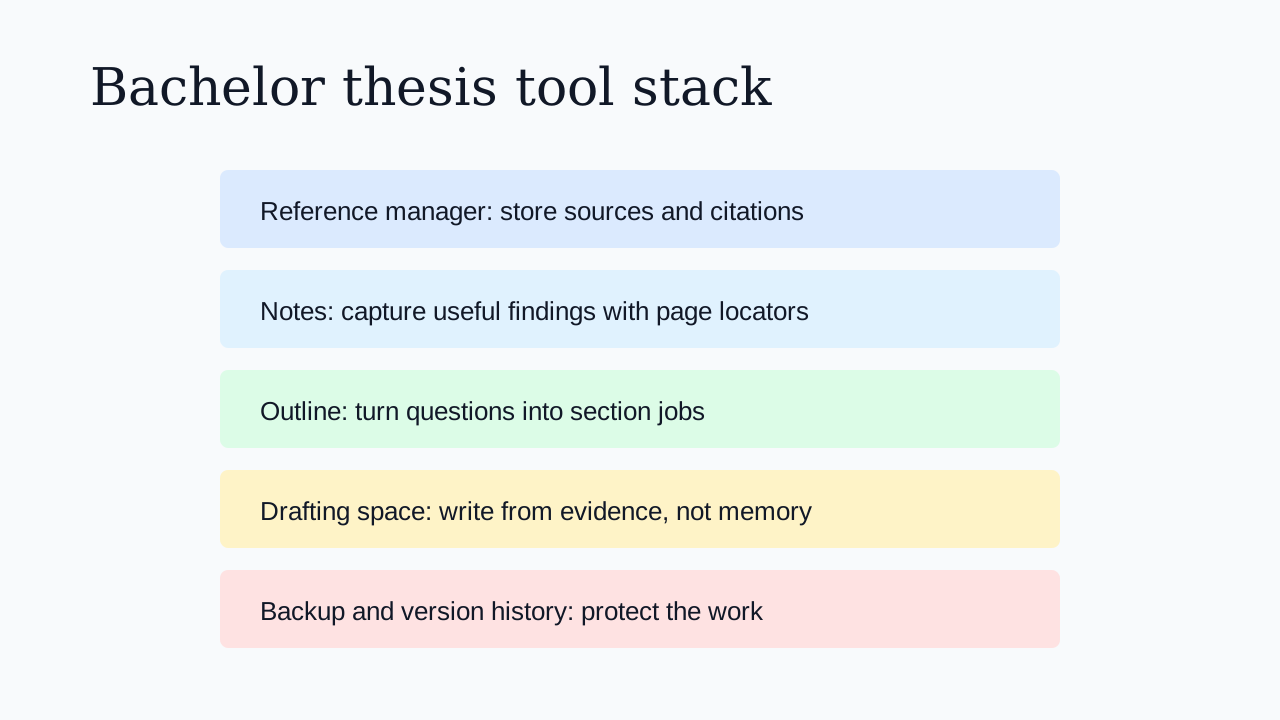
| Job | What the tool must do |
|---|---|
| Sources | Save citation data, PDFs, links, and stable identifiers. |
| Notes | Keep findings, page locators, and your interpretation separate. |
| Outline | Turn your question into sections with evidence assigned to each. |
| Draft | Let you write while checking sources and feedback. |
| Backup | Recover earlier versions and prevent deadline disasters. |
Avoid tool hopping when the thesis gets stressful
A common student pain point is switching tools whenever the project feels messy. The mess is often not the app; it is an unclear question, missing source locators, or an outline that has not been tested with evidence.
- Pick one reference manager early and keep it stable.
- Use one place for source notes and one place for the draft.
- Do a weekly backup check.
- Change tools only when you can name the exact job the current setup cannot do.
Where Thezis fits in the stack
Use a reference manager for your full library. Use Thezis when you are turning selected sources into sections, claims, and draft language. That keeps the thesis grounded in evidence without making your entire research library live inside the writing surface.