 Thezis
How to Get an A in Your Master Thesis

No guide can guarantee a grade, and every department has its own rubric. But high-scoring master theses tend to share the same habits: a focused question, justified choices, source synthesis, clear structure, and evidence-aware revision.
Aim for judgment, not just effort
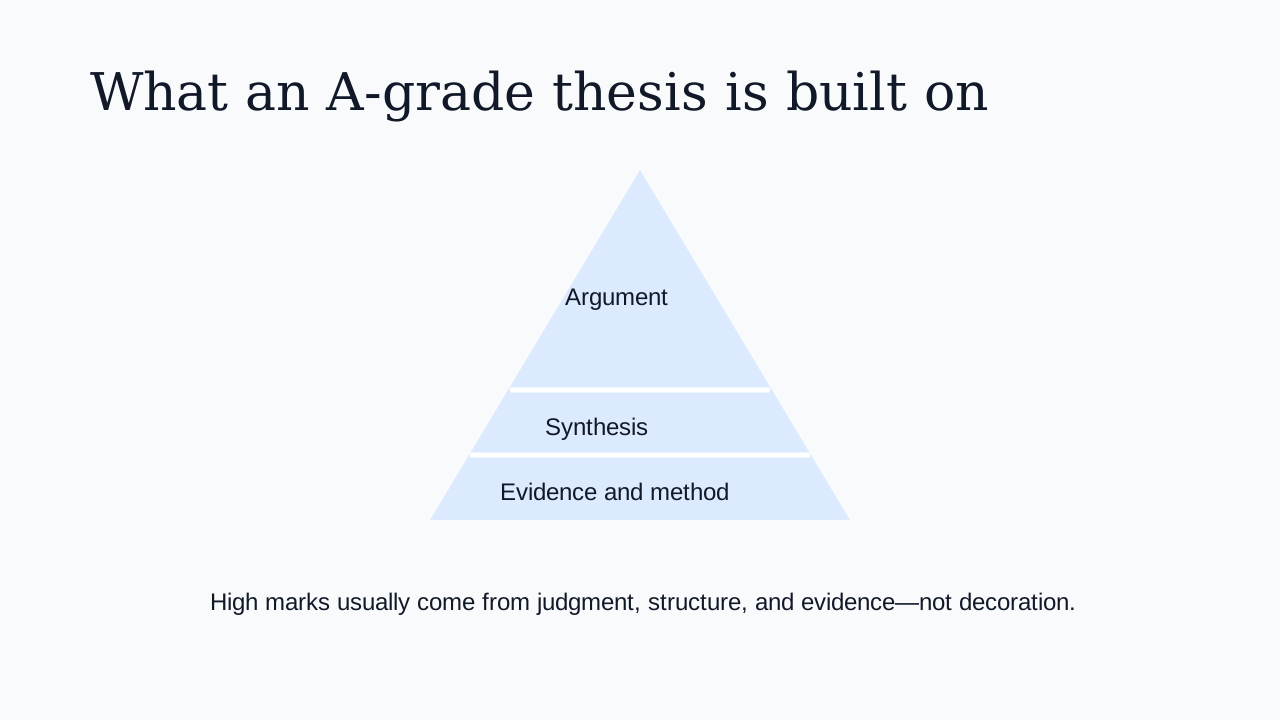
Writing-center advice tends to return to the same principle: strong academic writing makes a claim, supports it, and shows the reader how the evidence has been interpreted. That is where grades are often won or lost.
Run A-grade checks before final editing
- Can the research question be answered by the evidence you actually collected?
- Does the method section justify choices rather than merely describe them?
- Does the literature review compare sources instead of summarizing one by one?
- Does every chapter make the main argument easier to understand?
- Are limitations explained as part of the reasoning, not hidden at the end?
Replace vague excellence with visible decisions
Make the literature review more critical.
Add a paragraph comparing how three studies define 'student engagement,' then explain which definition my thesis uses and why.
The second goal creates a visible intellectual decision. That is what readers can evaluate.