 Thezis
How to Write a PhD Thesis Without Drowning in Notes, Chapters, and Revisions

A PhD thesis is not just a larger master's thesis. It has to show an original contribution, explain how that contribution was produced, and carry a reader through years of thinking without making them reconstruct the project from your notes.
Write the contribution before arranging chapters
Start with a working contribution statement: what does the thesis help the field understand, test, build, or reinterpret? MIT thesis preparation guidance is strict about the final document as a research output; that output needs a visible intellectual center. MIT Libraries thesis preparation
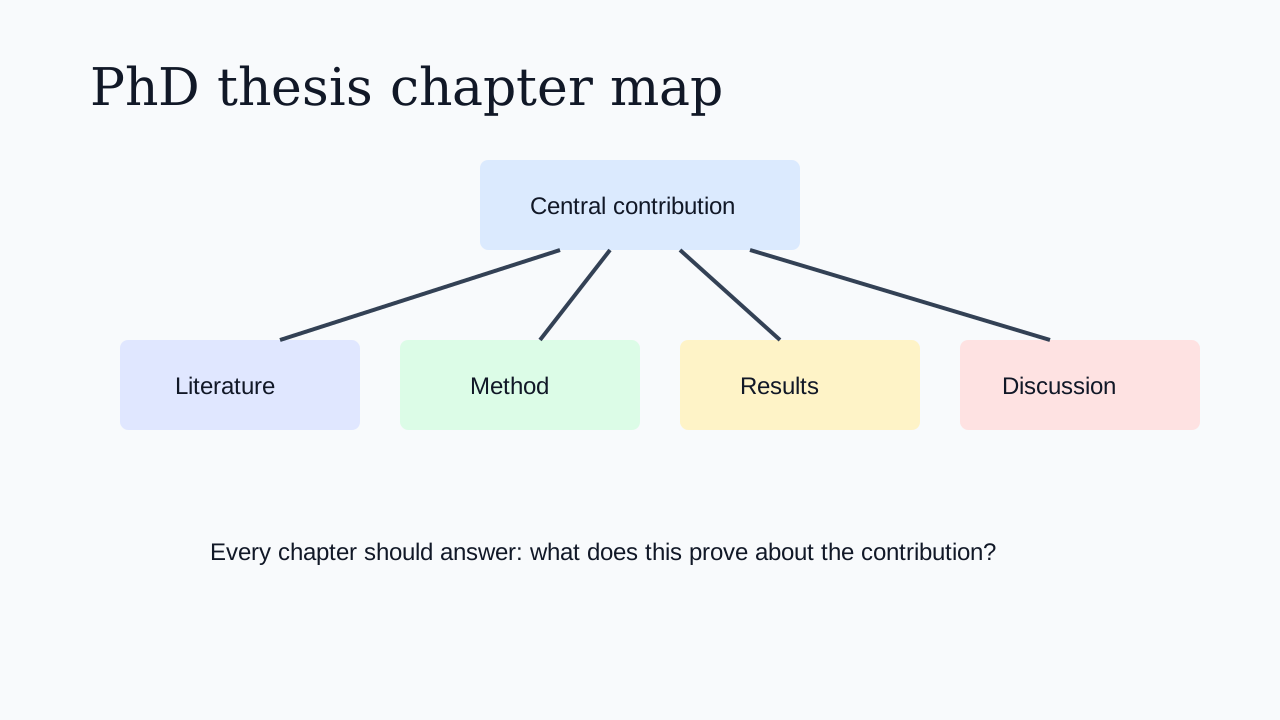
Give every chapter a contract
| Question | Why it matters |
|---|---|
| What does this chapter prove? | Prevents descriptive chapters with no argumentative job. |
| What evidence belongs here? | Keeps sources and results from drifting between chapters. |
| What can wait? | Protects the draft from endless expansion. |
| What feedback is needed? | Makes supervision more specific. |
PhD writers often have too much material, not too little. A chapter contract helps you decide what belongs in the thesis and what belongs in a future article, appendix, or archive.
Revise at the level of claims before prose
- Check whether each chapter claim still supports the contribution.
- Move evidence before rewriting paragraphs.
- Keep a decision log for major changes after supervision.
- Schedule recovery time after feedback-heavy milestones.
A polished chapter can still fail if the claim is unclear. Save language editing for after the chapter's job is stable.